Typing Lessons
Build your skills, one row at a time.
Learn where each finger belongs, practise new keys in small groups, and bring them together in words and sentences. Start with the home row or choose the lesson that matches what you need to practise.
Lesson Directory
Choose a lesson to practise a specific set of keys. Work through the groups in order or jump to the area you want to improve.
Beginner: Find the Home Row
Use F and J as your anchor points. Add the other home-row fingers before combining them in a review.
Reach the Top Row
Move up from the home row, press the target keys, then return. Keep the movement small and controlled.
Explore the Bottom Row
Practise the downward reaches without moving your whole hand away from its starting position.
Bring the Full Keyboard Together
Apply the key movements to words, capitals, punctuation and numbers, then work on control and pace.
How These Typing Lessons Help You Learn
Typing lessons break the keyboard into manageable groups. Repeating a small set of keys helps you learn the movement before you have to think about whole sentences.
Work through the lessons in order if you are new to touch typing. If you already know the keyboard, choose a group that causes hesitation and use its review lesson to check your control. For the background, read our touch typing guide.
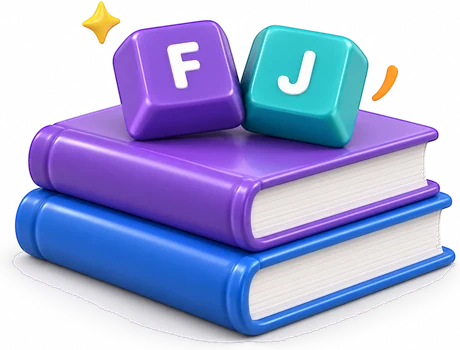
Start with the Right Finger Position
Rest your left hand on A S D F and your right hand on J K L ;. Find the bumps on F and J without looking down. Either thumb can press Space.
A Simple Routine for Every Lesson
Check which characters the lesson introduces and which fingers will reach them.
Keep your eyes on the practice text. If you lose your position, find F and J and begin again calmly.
Notice the letters you hesitate on. Practise that small group before increasing your pace.
Choose the next lesson when you can complete the current pattern with consistent control. Return to earlier lessons whenever you need a refresher.
Make Practice Easier to Repeat
Choose one skill for each session: a new row, a Shift combination or punctuation. A focused session is easier to review than jumping between unrelated exercises.
Building pace can reinforce the wrong movement. First build a comfortable rhythm with fewer mistakes, then increase your pace without sacrificing control.
When a Lesson Feels Difficult
| What happens | What to practise next |
|---|---|
| You keep looking at the keyboard | Return to F and J and the home-row review |
| You mix up nearby keys | Repeat the lesson containing that key pair |
| Letters feel easy but sentences feel slow | Practise common words, capitals and punctuation |
Typing Lessons: Common Questions
Which lesson should a beginner start with?
Start with F and J, then follow the home-row lessons. These keys give your fingers a reliable starting position.
Do I need to finish every lesson in order?
The order is helpful for beginners. If you already know a row, use its review lesson to decide whether to continue or revisit a key pair.
How long does it take to learn touch typing?
The time varies with your starting point and practice habits. Look for fewer glances at the keyboard and smoother movements rather than a fixed deadline.
When should I move from lessons to typing tests?
Try a 1 minute typing test when you feel comfortable typing connected text. Use lessons again to work on the specific keys or combinations that slow you down.
Your first step is F and J.
Start with the first lesson and build your skills from there.